Program
Self-Regulation, Neuroscience, & Play
The Sylva School Philosophy™ is built on self-regulation and a calm nervous system that spark children's ability to manage impulses, sustain attention, retain knowledge, build healthy relationships, and bounce back from stress.
Foundational Philosophy //
How do we do it?
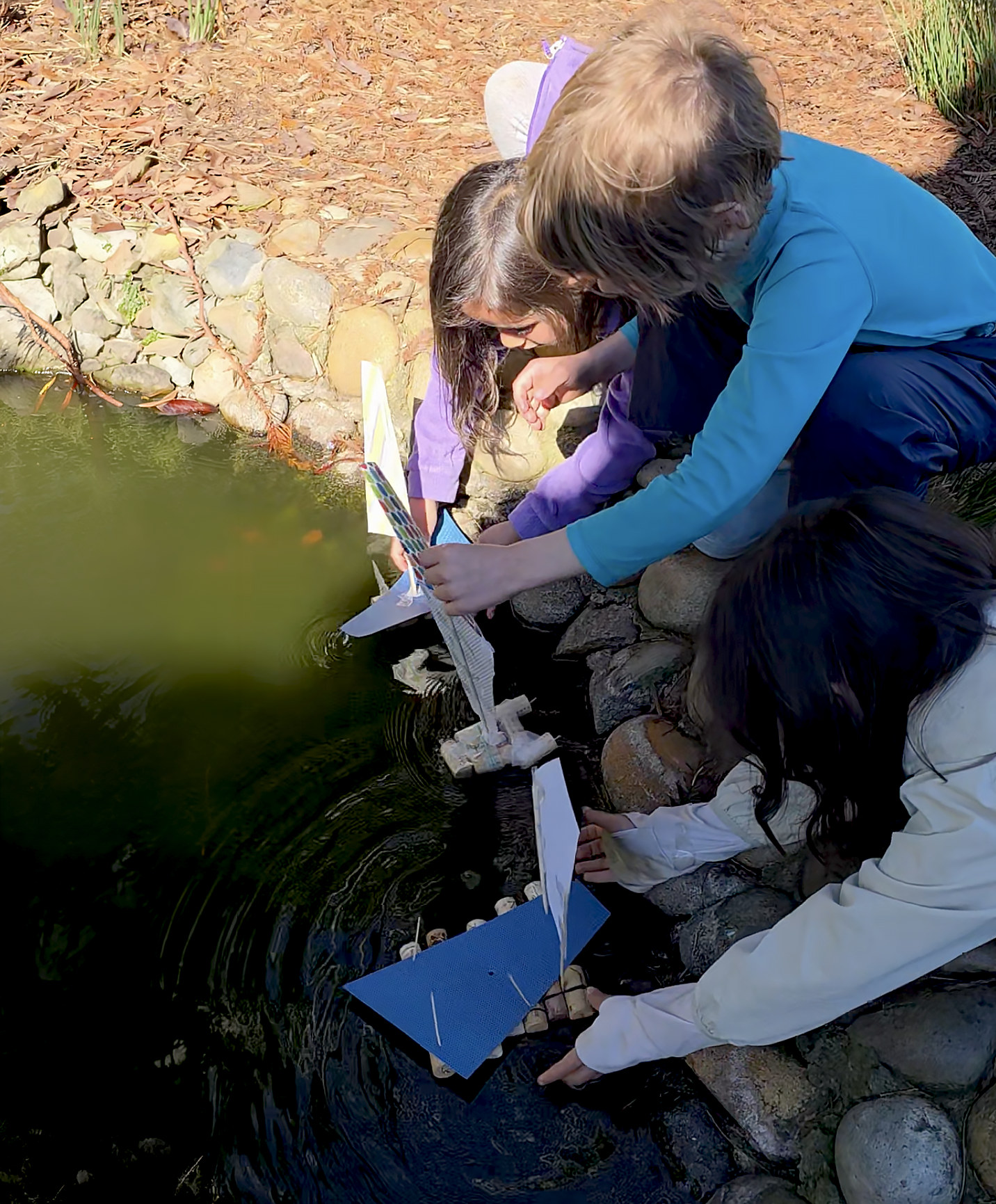
Nature
AI
For a calm environment to ignite curiosity and wonder.
As a tool for adaptive mastery learning.
To mirror real world dynamics and problem solving.
Core academics are often mastered within a focused 2-hour or less window.
Depth Over Duration
Mixed Ages
Child-led Interest Projects
Teachers & Staff
To build hands-on cross skills like sourcing materials, understanding budgets, and co-working.
As mentors they listen closely, observe carefully, and celebrate effort and progress in ways that make each child feel genuinely understood, not managed.
The result is not only strong academic growth, but children who know how to learn, think, and navigate the world with confidence, long after the lesson is over.
Academics //
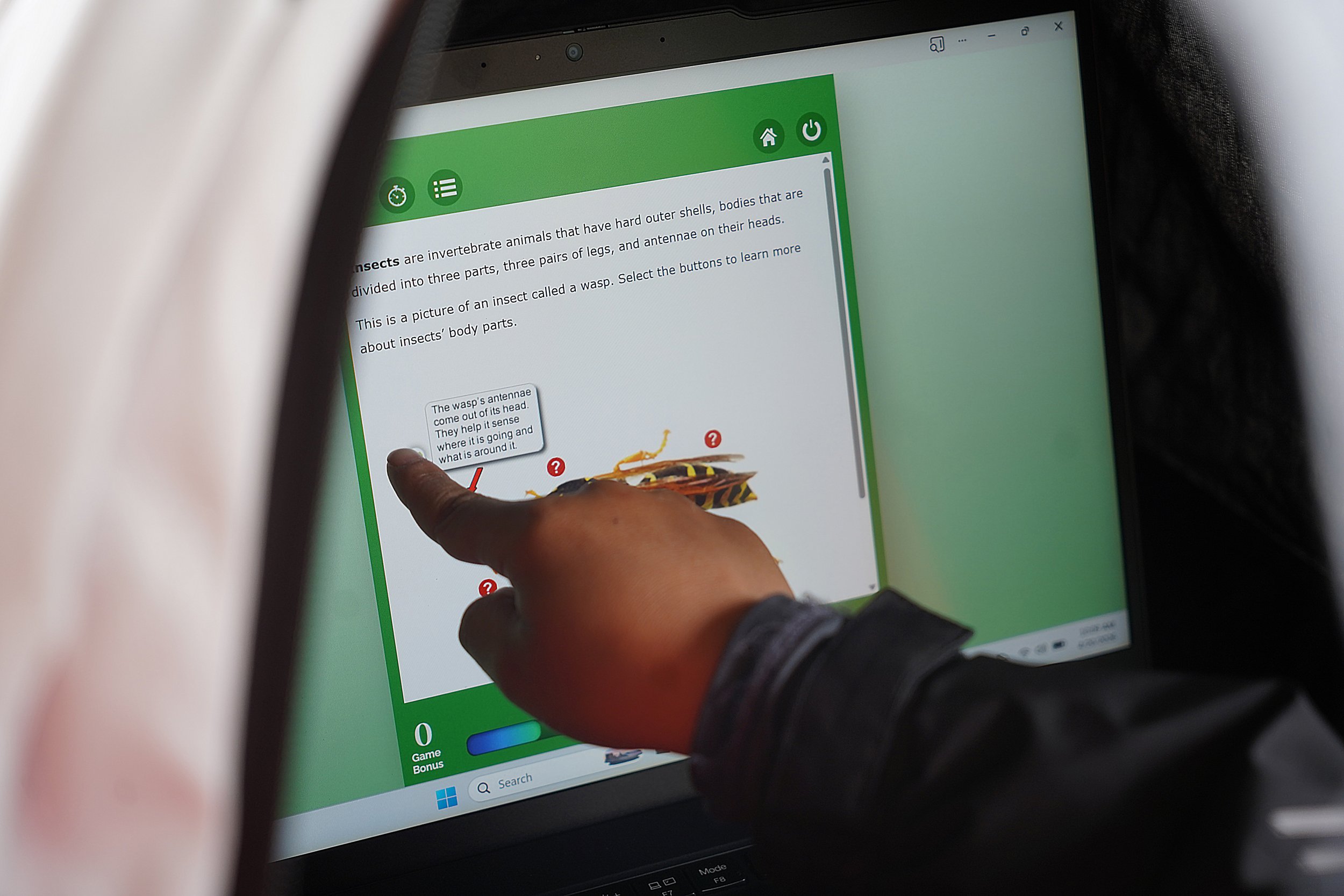
Adaptive Learning Sessions Through Our AI-driven platform
Our platform calculates what kind of questions, situations or methods work for each individual student and adjust accordingly ensuring your child learns best. This allows core academics to be mastered efficiently, often within a focused 2-hour or less window.
Rather than confining students to a desk and learning across a six-hour day filled with external pressure, our students learn in an emotionally safe environment without comparison to peers or pressure to keep up with a standardized timeline.
Curriculum
Math
Concepts include: number recognition, counting, place value, addition and subtraction, skip counting, basic multiplication foundations, measurement, time, money, geometry, fractions, word problems, and early problem-solving strategies
Science
Concepts include: plants and animals, habitats, weather, seasons, the human body, matter, energy, Earth and space science, ecosystems, forces and motion, and basic engineering and scientific inquiry skills.
Weekly Reviews
Every Friday, we sum up the week’s learning through interactive games.

Social Science
History, Geography, Government, Economics, Traditions, Cultures, Mapping, Timelines
Language Arts
Phonics, Spelling, Reading, Reading Comprehension, Grammar, Vocabulary, and Writing Skills
Learn More About Our Curriculum
Individualized Academics
How we use our adaptive learning platform to individualize academics for each student.
Challenges. Reframe. Give Space.
How Sylva School connects academics to child-led interest projects and play.
Connecting Academics, Play, & Projects
Teacher Carla talks about turning challenges into growth.
// PEDAGOGY
E.M.P.A.T.H.Y.S.
Emotional Labeling
Help children recognize and name emotions before we move through them


Mirroring
Reflect back words and feelings so a child feels heard
Patience Pause
Create space so children can process rather than react
Assumption Audits
Verbalizing unexpressed self-limiting beliefs to help a child overcome them
Tone & Temperament Awareness
Adjust energy and tone to meet a child where they are

Hidden Need Assessment
Find the unmet need driving the behavior
Yes-momentum & The Power of ‘No’
Use affirmative scaffolds to build engagement, and keep ‘no’ as a clear boundary, never an adult emotional reaction
Summary & Positive Anchoring
Wrap conflict with clarity, connection, and a forward plan
A Day in the Life*
-
Where we discuss safety and other details of the day
-
Students gather to begin the academic portion of their day in their individual tents
-
Students are wrapping up the academic portion of their day and getting ready to start their daily adventures and explorations (example: museums, hikes, gathering supplies, or building robots!)
-
Students are responsible for brining their own lunch, but we'll provide water and some additional snacks throughout the day.
-
Adventures and explorations continued, usually in a new, undiscovered area or maybe with a return to what they were engaged with before lunch
-
At the end of school day children are gathering belongings and meeting for pick-up
*This is an example only. Due to the fluidity of our school, times vary depending on the children’s daily needs. We offer drinks and snacks throughout their day and adjust according to what best compliments their academics and interest projects.
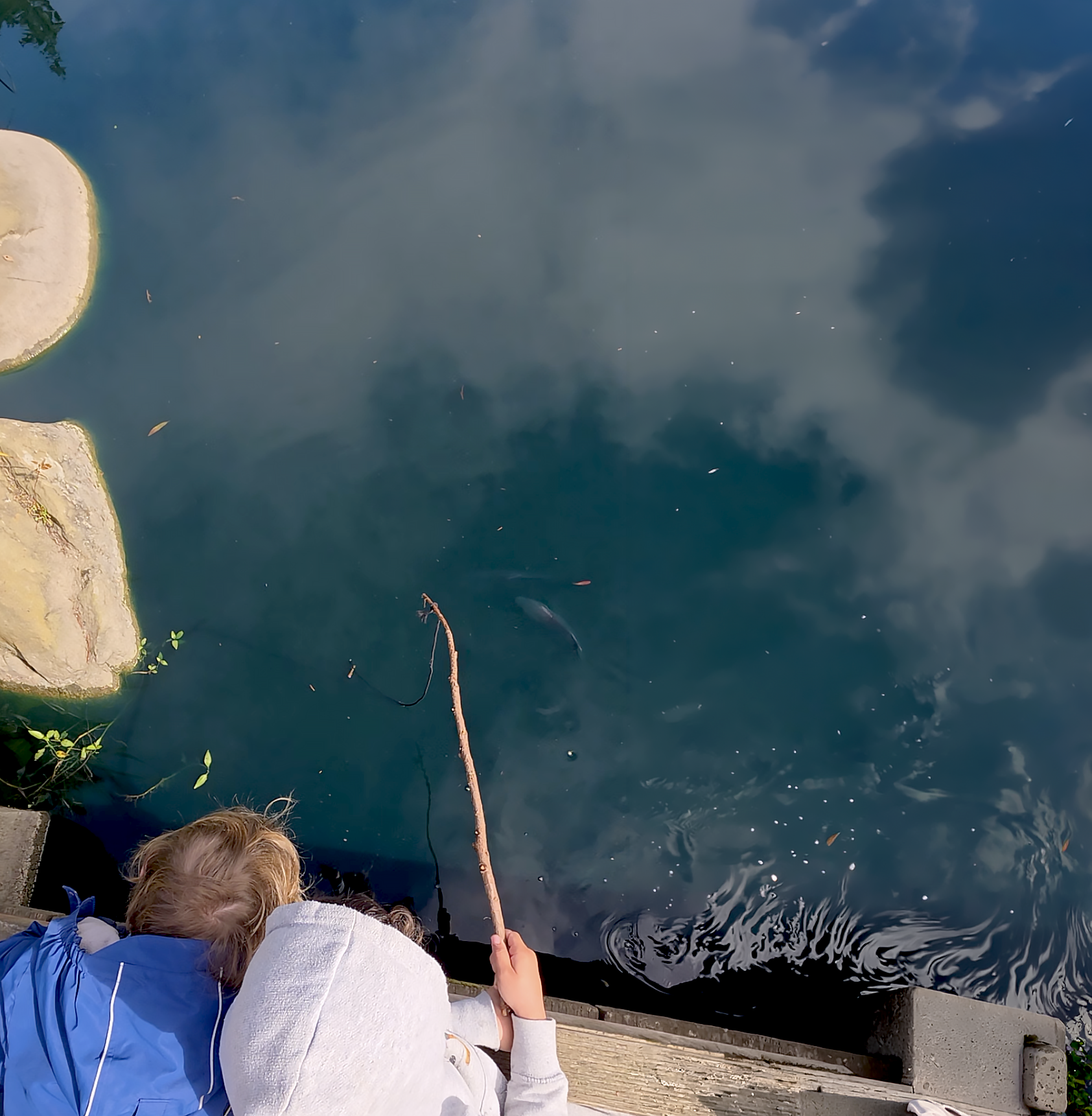
“Laura and her whole team are gold. Attentive, kind, and caring are a few of the words that come to mind. Communication is always transparent and open. Our daughter’s day is full of fun, exploration, adventure, hands on learning, confidence building, beautiful friendships all in a safe, loving, and thoughtful environment.”
— Parent
Frequently Asked Questions
Still have questions? Take a look at our FAQs or get in touch anytime.
-
Sylva School was created from a simple but often forgotten truth: children learn best when they feel safe, trusted, and free to explore the world around them.
Our philosophy is rooted in child-led learning, emotional development, and real-life experience. We focus on building confidence, autonomy, resilience, and self-awareness first, because those are the foundations that make all other learning possible. When a child trusts themselves, they don’t just absorb information, they engage with it, question it, and make it their own.
In a traditional classroom, learning is often directed, timed, and measured against a group standard. Children are asked to sit, follow, and keep pace, regardless of where they are developmentally. At Sylva School, we shift that entirely. We meet each child where they are. Academics are approached through an adaptive platform that moves at their individual pace, allowing them to be challenged without pressure or comparison. This gives us something incredibly valuable: time.
Time to play.
Time to build relationships.
Time to take risks, solve problems, get messy, and try again.
Time to experience and understand the real world through the city they live in, not just read about it.
The majority of our day is spent outdoors, where children engage in unstructured play, collaborative problem-solving, and hands-on experiences. Our teachers act as mentors, not directors, stepping in with intention rather than control. We don’t rush to fix or lead; we support children as they learn to navigate challenges themselves.
We still meet California academic standards. We simply don’t believe those standards should come at the cost of childhood. Sylva School is different because we are not trying to produce the same outcome in every child. We are creating space for each child to become fully themselves.
-
Learning doesn’t begin and end at a desk, and it doesn’t only count when it looks academic.
Our academic block is intentionally focused and efficient, using an adaptive learning platform that meets each child exactly where they are and moves at their pace. This allows us to deliver standards-aligned instruction in a shorter, more meaningful window of time.
The remainder of the day is not “free time.” It is applied learning.
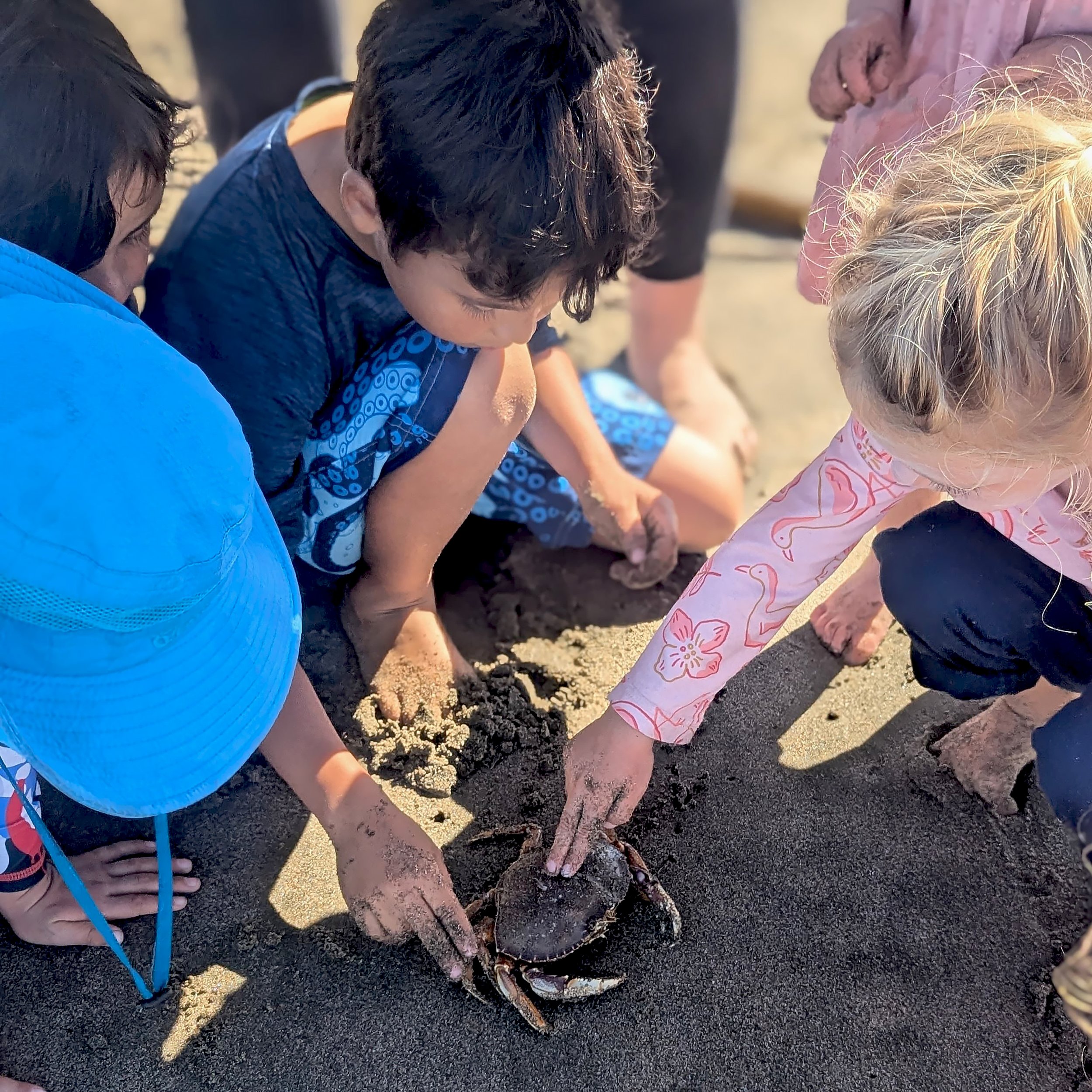
Field trips, workshops, collaborative play, and real-world exploration are all extensions of the academic concepts children are working through. Whether they are measuring distance at the beach, navigating social dynamics in play, creating a custom made version of a concept they just learned through one of our workshop series, learning about cultures, continents, or customs through one of our many field trips, or observing ecosystems in the park, they are actively practicing critical thinking, problem-solving, communication, and adaptability.
These experiences deepen understanding in a way that traditional instruction alone cannot.
At Sylva School, instructional time includes both:
Direct academic learning
Applied, real-world integration of those skills
Because true learning is not just knowing something, it’s being able to use it.
-
We’re very intentional about this.
Academic learning is not left to chance. We use an adaptive learning platform that aligns with California state standards and meets each child exactly where they are.
It adjusts in real time, offering support where needed and challenge when a child is ready, so they are always moving forward without pressure or comparison.
Our teachers oversee this process closely. They’re not removed from academics. They track progress, and make sure each child is building a strong, steady foundation in core subjects.
Where Sylva School is different is what happens next. We don’t stop at understanding something on a screen. We extend it into the real world.
If a child is learning measurement, we’re measuring distance in the park.
If they’re working on reading comprehension, we’re applying it through storytelling, group discussion, and lived experiences.
If they’re exploring science concepts, we’re observing, questioning, and interacting with the natural environment around us.
The outdoor portion of our day is not separate from academics.
It’s where academics come to life.
So, while our structure may look different, the outcome is the same, if not stronger.
Children are not only meeting standards, they’re understanding what they’re learning and how to use it.
Because knowing something is one thing, but being able to apply it is what makes it stick.
-
Safety is both structured and intentional. It’s something we take seriously, without removing the very experiences that help children learn how to keep themselves safe.
We maintain a low student-to-teacher ratio so children are always within sight and supervision. Our team is trained not only in standard safety protocols, like first aid and emergency response, but also in how to guide children through real-world risk in a thoughtful, supportive way.
Before entering any environment, we assess it. We consider terrain, weather, visibility, and group dynamics. We set clear boundaries and expectations with the children, and we revisit them often.
Rather than simply telling children “be careful,” we teach them how to be aware.
We teach the children to listen to their own bodies when they are trying something physically challenging, such as, “How does your body feel up there?” “What is your plan once you reach the top?” “Do you feel like that is a safe choice?” “What is your body telling you to do?”
By bringing the child’s thoughts inward in this way, they learn to listen to their intuition, gut, and instincts instead of relying on others to dictate what feels safe for them.
Children learn to assess their own bodies, their surroundings, and their limits. They practice balance, coordination, and decision-making in real time, with an adult nearby who is present, attentive, and ready to step in when truly needed.
We also have clear systems in place for:
Check-in and check-out procedures
Emergency communication
Designated meeting locations
Ongoing supervision during transitions and exploration
Outdoor environments naturally invite movement, curiosity, and challenge. Our role is to create a space where children can engage with those elements safely, not fearfully.
Because long-term safety doesn’t come from avoiding risk.
It comes from understanding it.
-
We expect children to be different. That’s where we begin.
There isn’t a single pace that children are asked to keep up with. Academically, we use an adaptive learning platform that meets each child exactly where they are. If a concept needs more time, it gives more time. If a child is ready to move ahead, it allows that too.
There’s no pressure to match the child next to them, and no holding back when they’re ready for more.
Our teachers are actively involved in this process. They’re watching closely, offering support, asking questions, and stepping in when a child needs a different approach. Not every child learns the same way, so we stay flexible in how we mentor them.
Beyond academics, a large part of our day is spent in play, collaboration, and real-world experiences. This is where many children naturally find their rhythm. Some lead, some observe, some jump in quickly, others take their time. All of it is supported.
We also place a strong focus on emotional development. Children are guided to understand their feelings, communicate their needs, and build the kind of self-awareness that helps them navigate challenges, both academically and socially.
If a child needs more support, we work closely with families to understand what will best serve them. If a child needs more challenge, we create space for that too.
The goal isn’t to move every child at the same speed.
It’s to help each child move forward in a way that actually works for them.
-
Yes! Not only learning, but retaining. Our students love learning so much that they are the architects of our Interest Projects and teachers take their lead when sourcing workshops and guest speakers. Students often apply what they have learned at home and have even inspire parents to engage and seek out activities based on our Interest Projects so the whole family can join in.
-
No! Our adaptive learning platform is simply a tool. It allows us to individualize learning to each student’s needs, with a focus on long-term retention and demonstrated competence rather than just course completion. The platform is used in tandem with our expert teachers and staff who are actively present during each lesson.
-
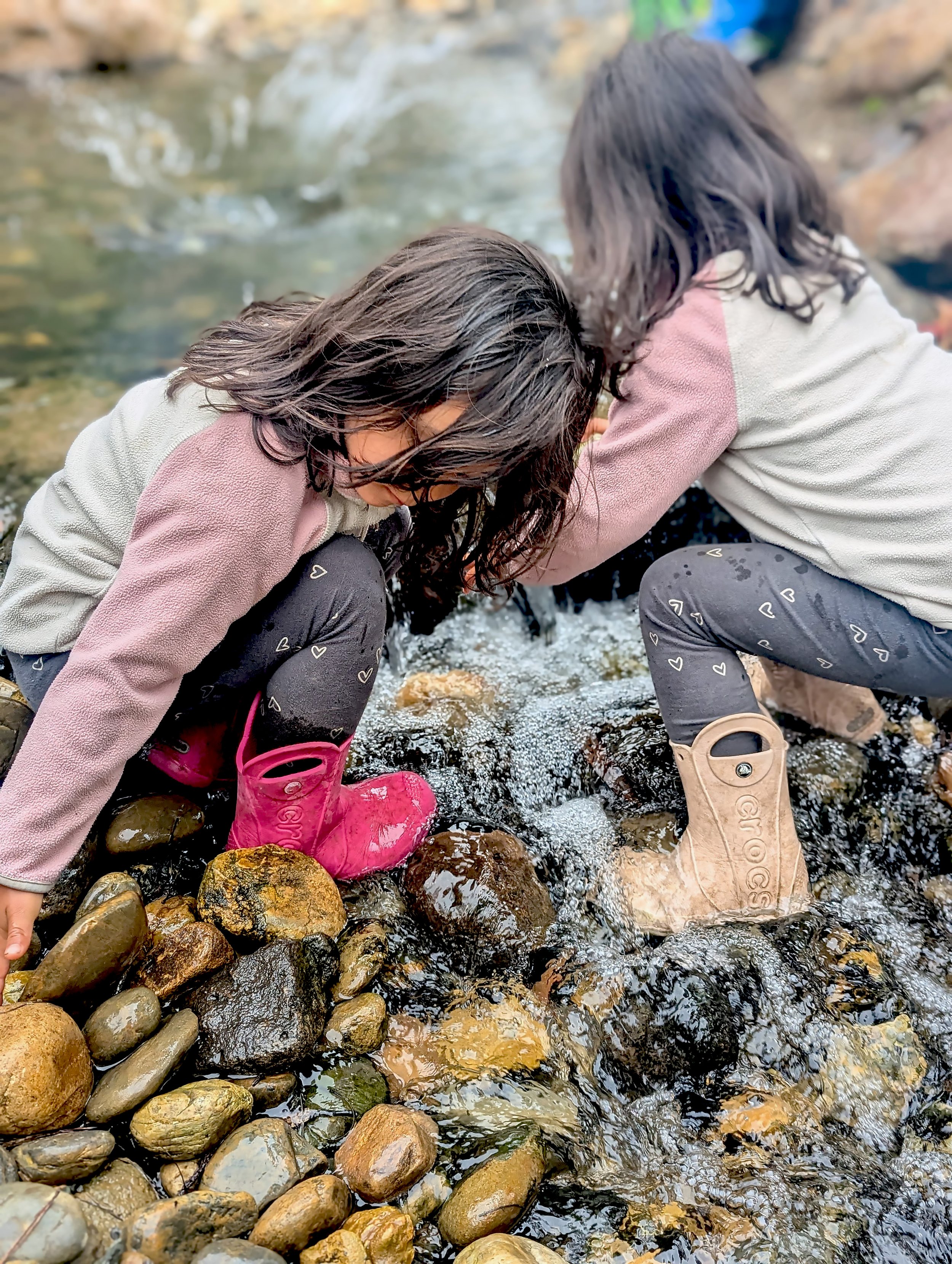
Everything at Sylva School starts with the nervous system. Being in nature, in the dirt, climbing on logs might look “chaotic” but in actuality is what naturally calms our nervous systems. We encourage our students to find their wild and model how to regulate and find their focus. Forest school principles and decades of brain development research point to the same conclusion: unstructured, child-led play in nature is one of the most powerful environments for building executive function: planning, problem-solving, emotional resilience, and self-regulation.
-
Our days are intentionally simple and flexible, with a rhythm that gives children both structure and space. We supply water and snacks throughout the day and students bring their own lunches.
Sample Day:
Children arrive for drop-off around 8:45am, giving them time to settle in, connect with their peers, and ease into the day. At 9:00, we have a morning meeting to set intentions for the day.
9:15am we begin our academic block. This is a focused, typically two-hour window where children move through standard-aligned learning at their own pace, supported by an adaptive learning platform fully supported by their teachers.
Around 11:00am, we transition into the part of the day where learning expands beyond the screen and into the world around them. This is where real-world learning begins. We head outdoors into the city and natural spaces, where children engage in exploration, collaboration, and hands-on experiences. The concepts they worked on in the morning don’t disappear; they come with us. They show up in movement, conversation, problem-solving, exploration, and play.
We pause for lunch together, creating space to rest, connect, and reset.
Around 1:00, we continue our time outside. This part of the day often deepens into longer play cycles, group projects, field trips, or workshops that allow children to follow their curiosity and build on what they’ve already started.
Pick-up is at 3:00, with children leaving not just having “completed a school day,” but having moved their bodies, engaged their minds, and experienced something real.
It’s a full day.
Just not in the way most people are used to.
-
We maintain 3 teachers for every pod of 10 students. We keep our ratios intentionally low so that every child is seen, supported, and truly known. With a small group of students, our team is able to stay present, attentive, and meaningfully engaged throughout the day. Each team includes a certified teacher who oversees academic alignment and ensures students are progressing through standards with care and clarity. Our team is studied in child development and aligned in the Sylva School way of understanding and maintaining emotional intelligence.
Teachers are extensively trained in the Sylva School philosophy. This training goes far beyond academics. It focuses on emotional intelligence, self-awareness, and self-regulation, not just as concepts, but as lived practices.
At Sylva School, our teachers don’t just guide learning. They model it:
They know how to support a child through frustration without rushing to fix it.
They know how to hold space for big emotions without shutting them down.
They know when to step in, and when to step back.
We place high value on these qualities because they shape how children experience themselves and the world around them. Academic knowledge matters, but the ability to connect, regulate, and respond with intention is what allows that knowledge to take root.
At Sylva School, we look for people who can guide the whole child, and then we train them to do it with depth, consistency, and care.
-
We understand that transitions happen, and when they do, we want them to feel smooth, clear, and well-supported for both you and your child.
Before transferring, each student is given a Benchmarker Assessment. This is a comprehensive, grade-level assessment that covers all academic standards and provides a clear snapshot of what your child has learned over time.
We share the results of this assessment, along with any additional placement or progress data, directly with the new school. This helps ensure your child is placed appropriately and that their learning is accurately understood from the start.
While Sylva School looks different from traditional schools, the skills and academics children develop here are absolutely transferable. Children transition with strong independence, confidence, and the ability to think critically, which supports them well in a variety of learning environments.
Our goal is to make sure your child leaves feeling prepared, capable, and supported, wherever they go next.
-
Tuition at Sylva is designed to be all-inclusive, so families don’t have to think about what’s needed day to day. Everything your child uses to learn, explore, and engage is thoughtfully provided.
Each student is given access to a school-owned computer that they use independently during the academic portion of the day, along with headphones to support focused learning. Journals and curriculum materials are included and used throughout both academic and real-world learning experiences.
All field trips and off-site excursions are covered, including transportation, museum entry, and experiences like art shows and workshops. These are not extras, they are an essential part of how children learn at Sylva School.
Tuition also includes a yearly subscription to our academic platform, which supports individualized, standards-aligned learning, as well as early reading support provided by a tutor on-site for children who need it.
Everything we include is intentional. If it’s part of the experience, it’s already built in.
-
We are very intentional about how reading is introduced, because the way a child learns to read shapes how they feel about learning for years to come.
Each morning, our kindergarteners and early readers are guided through a small-group workshop designed to gently and confidently move them into reading.
We begin with the foundation.
Children build phonemic awareness by learning to hear, recognize, and play with sounds in spoken language. This shows up through rhyming games, word play, and conversation that feels engaging rather than forced. From there, we guide them into understanding the relationship between letters and sounds, giving them the tools they need to decode words on their own.
As they begin reading, we use simple, decodable texts that allow children to practice without guessing. They revisit familiar books often, building fluency, confidence, and a sense of mastery over time.
We also bring reading to life through visuals and interaction.
Games, colorful texts, and hands-on games support vocabulary and comprehension, while movement and play keep the experience engaging and accessible.
Reading aloud is a regular part of our day. Children read with teachers and peers, hearing fluent reading modeled for them while also practicing in a supported, low-pressure environment. We guide them to read with expression, helping them understand not just the words, but the meaning behind them.
Most importantly, we focus on how reading feels.
Children are given choice in what they read, and we create a consistent rhythm around reading each day. The goal is not just to teach a child how to read, but to help them enjoy it, to feel confident doing it, and to see themselves as capable.
Because when a child believes they can read, they don’t just learn it. They carry it with them.
-
Yes, we provide report cards twice a year to give a clear, thoughtful snapshot of your child’s academic progress and development.
That said, we don’t believe meaningful communication should be limited to a few scheduled dates on a calendar.
At Sylva School, you have ongoing access to your child’s progress through the parent portal on our academic platform, where you can see their work and growth in real time. Beyond that, communication with families happens consistently and as needed. If something comes up, whether it’s a challenge or a success, we reach out in the moment rather than waiting for a formal conference.
We don’t schedule traditional parent/teacher conferences throughout the year, but you are always welcome to connect with us. Families can request a meeting at any time with their child’s lead teacher or with the founder of Sylva to talk through anything that feels important.
We’ve found this approach allows for more honest, timely conversations, while also respecting your family’s time and the time of our staff.
It keeps communication where it belongs: open, ongoing, and meaningful.
-
We do, just not in the traditional, high-pressure way most people think of. We use a comprehensive assessment system built into our academic platform that aligns directly with state standards. This includes placement tests, skill-based assessments, and benchmark evaluations that measure progress across all grade-level expectations.
These assessments allow us to:
Identify where a child is currently working, not just where they are “supposed” to be
Track progress across all required standards
Measure mastery of grade-level skills over time, not just foundational knowledge
Our Benchmark Assessments are particularly important. They are longer, summative evaluations that cover all standards within a grade level and provide a clear snapshot of what a child has learned throughout the year.
We also use ongoing, smaller assessments to monitor progress in real time. This gives us a continuous understanding of each child’s growth, rather than relying on a single test on a single day.
Because our system is built around state standards, students are practicing and being assessed on the same skills they would encounter in traditional standardized testing. In fact, the platform is designed specifically to prepare students for those expectations through targeted, adaptive practice tied to each state’s requirements.
The difference at Sylva School is how it feels.
We remove the pressure, the comparison, and the “one moment defines you” experience. Instead, assessment becomes a tool. Something that guides learning, not something that labels a child.
So yes, we absolutely measure progress and ensure students are meeting standards. We just do it in a way that is consistent, accurate, and supportive of the child as a whole.
-
We are intentionally starting small. We began with kindergarten through 3rd grade because these are the years where the foundation matters most. This is where confidence is built, where a child begins to understand themselves as a learner, and where their relationship with school is shaped for years to come.
Rather than rushing to expand, we chose to build this foundation with care, refine it, and make sure it truly works the way we believe it can.
That said, Sylva School is growing.
We plan to extend into 4th-6th grade beginning in the 2026–27 school year, with the intention of continuing to expand year by year. Our goal is to create a full continuum where children can remain within this model as they grow, without losing the consistency of what makes Sylva School so unique.
For families who may transition before that expansion is complete, we support the process fully. Students leave Sylva School with strong academic foundations, along with independence, confidence, and the ability to adapt, all of which serve them well in a variety of school environments.
Sylva School was never meant to stay small forever. It’s meant to grow thoughtfully, alongside the children and families who believe in it.
-
Field trips are a core part of how we learn.
We regularly explore places like the California Academy of Sciences, de Young Museum, Exploratorium, Conservatory of Flowers, and the San Francisco Botanical Garden.
We spend time in natural spaces like Lands End and Ocean Beach, and we visit places that bring creativity and real-world skills to life, like SCRAP Creative Reuse and we visit 9th Street to visit all of the wonderful culinary delights as we explore where each food originated and is culturally celebrated.
We also explore the San Francisco Zoo, Oakland Zoo, planetariums, The Bay Area Museum, and cultural spaces that deepen children’s understanding of the world around them. These are just a few examples.
Each school year is intentionally shaped around the interests and curiosities of the students in front of us. We pay attention to what sparks their imagination and build experiences around that, using the city of San Francisco and its surrounding areas as an extension of the classroom.
Because at Sylva School, the world isn’t something we study from a distance. It’s something we step into.
-
We are designed to move.
We meet in thoughtfully selected locations throughout San Francisco to give children access to rich, real-world environments that naturally support their learning.
We are not tied to a single, fixed campus. Instead, we choose one primary location each week and stay grounded there, allowing children to build familiarity, confidence, and connection within that space.
Because we are fully outdoors, our locations are chosen with intention. We consider weather, safety, group needs, and the types of experiences we want to create for the children that week.
Each Sunday, families receive the upcoming week’s meeting location through our school communication app, so you always know exactly where to go.
Occasionally, a location may shift slightly due to weather, a planned workshop, or a field trip. When that happens, we communicate in advance and do our best to be mindful of your time and planning.
Our priority is always the same: to create an environment that supports your child’s experience, curiosity, and safety.
-
We believe communication should feel clear, consistent, and easy to access. We use a centralized communication app to keep everything in one place.
Through this platform, families receive weekly updates, including meeting locations, schedule details, and any important announcements for the days ahead.
You’ll also have access to your child’s academic progress, daily activity updates, and any relevant notes from our team. It allows you to stay connected to what your child is experiencing without having to search for information or wait for formal updates.
Communication doesn’t stop at logistics.
We reach out in real time when something meaningful happens, whether it’s a moment of growth, a challenge, or something we feel you should be part of. You’re not waiting for a conference to hear about your child’s day-to-day experience.
The app also gives you a direct line to our team, making it simple to ask questions, share information, or connect when needed.
Everything is designed to keep communication where it belongs: ongoing, transparent, and supportive.
-
We approach standards with intention, not as a checklist, but as a foundation.
Our academic platform is aligned with California state standards and guides each child through the required skills in math, reading, writing, and more. It adapts in real time, meeting children where they are, filling in gaps, and advancing them when they’re ready. This ensures that every standard is introduced, practiced, and mastered in a way that actually fits the child.
But we don’t stop there.
What a child learns during the academic portion of the day is extended into real-world experiences. This is where those standards become meaningful.
If a child is working on measurement, they’re applying it while building, exploring distance, or navigating space outdoors.
If they’re developing reading skills, they’re using them in conversation, storytelling, and shared experiences.
If they’re learning science concepts, they’re observing, questioning, and interacting with the environment around them.
These are not separate parts of the day. They are connected.
The platform ensures standards are being met.
The real-world extensions ensure those standards are understood, retained, and used.
We also track progress continuously through the platform’s assessments and benchmarks, giving us clear insight into each child’s growth across all required areas.
Children aren’t just exposed to standards. They experience them. And that’s what makes the learning stick.
-
We like to say there’s no such thing as bad weather, only bad clothing choices.
Weather is part of the learning experience, not something we avoid. Fog, wind, rain, and sunshine all offer children the opportunity to adapt, observe, and engage with the natural world in real time. These moments build resilience, awareness, and confidence in a way a controlled environment simply can’t. We prepare for it, dress for it, and use it.
That said, safety always comes first.
If weather conditions become unsafe, such as extreme wind, heavy storms, or unhealthy heat, we move our learning environment indoors to spaces like the California Academy of Sciences or the Exploratorium, or another safe, engaging location. These shifts are intentional and communicated in advance whenever possible.
Most of the time, though, you’ll find us outside, embracing whatever the day brings. Because learning how to adapt to the world around you is just as important as anything we could teach inside.
-
Our platform delivers the lesson.
We support the human in front of it.
Academic learning doesn’t happen in isolation from a child’s emotional experience. When a student feels stuck, frustrated, or overwhelmed, we don’t push them through it or ask them to ignore it.
We pause.
Our teachers step in to help the child recognize what they’re feeling, name it, and understand where it’s coming from. From there, we support them toward a strategy that helps them return to the work in a calm, focused, and self-regulated state:
Sometimes that looks like taking a break.
Sometimes it is grabbing a snack or water.
Sometimes it is moving to a different subject and coming back to the challenge after their nervous system has calmed.
Sometimes it’s reframing the challenge.
Sometimes it’s simply sitting beside them while they work through it.
Our platform allows each child to move at their own pace, which already reduces a great deal of pressure. But the real difference is how we respond when emotions show up.
We don’t see emotions as interruptions to learning. We see them as part of it. Because when a child learns how to move through frustration, build patience, and trust themselves in the process, they’re not just completing a lesson. They’re building the skills that allow them to keep learning.
We are enrolling a small inaugural cohort for Fall 2026.
We are offering a special Founding Families tuition discount to the first three enrolled families.